


FUJI Sakura cermet saw blades combine heat and wear resistance for portable metal cutting.


FUJI Sakura blades use cermet cutting tips for metal sawing. The 135JA is intended for compatible rechargeable metal cutters. The 100A/U/Z group is listed in the Japanese catalog for circular saws and dustproof cutters. These are distinct applications: matching the bore alone does not establish machine compatibility.
| Outside diameter | 135 mm |
|---|---|
| Cutting thickness | 1.1 mm |
| Bore | 20 mm |
| Teeth | 30 |
| Maximum speed | 3,500 min⁻¹ |
| Catalog machine example | Panasonic EZ4542; verify the supplied machine version |
The catalog lists iron, stainless steel, conduit, angle steel, bolts, round and square tubing, lined steel tube and deck plate. Confirm material thickness and machine cutting capacity before ordering. The thin cutting section is designed to reduce cutting resistance; battery runtime and blade life depend on the actual job.

| Model | Dimensions, mm | Teeth | Catalog application |
|---|---|---|---|
| 100A | 100 × 1.4 × 20 | 22 | Iron/stainless; thicker material |
| 100U | 100 × 1.4 × 20 | 32 | Iron/stainless; thinner material |
| 100Z | 100 × 1.6 × 20 | 40 | Aluminum |
The catalog gives a grouped speed range of 8,000–13,000 min⁻¹ for this section, not a separately assigned limit for each row. Use the maximum speed marked on the exact blade; never treat the upper end of this range as approval for every model. The catalog marks 100Z as discontinued after existing stock is exhausted. Confirm availability.
Sakura 110J appears in the illustration, but the current table does not provide its dimensions or speed. Request the exact blade label and current specification rather than substituting Tsubaki 110TU data.

Cermet combines ceramic and metallic constituents in the cutting tip. FUJI's Sakura catalog highlights heat resistance, wear resistance and a special tip composition intended to reduce tip chipping. These properties support repeated metal cutting where the cutting edge encounters heat and abrasion. Choose the model for the workpiece and the cutter rather than treating the entire Sakura range as one universal blade.
The cermet tips are designed to retain cutting performance when sawing iron and stainless steel in the approved applications. For workshop buyers, the useful comparison is the number of acceptable cuts, edge condition and replacement interval on the actual material. Blade life varies with material grade, section thickness, feed, clamping and machine condition.
Sakura 135JA uses a 1.1 mm cutting thickness. The catalog describes this thin-blade design as reducing cutting resistance and improving cutting performance and service life. It is a practical choice to evaluate for portable metal-cutting work where the cutter and blade dimensions match. A thin blade still needs correct support and straight feeding; it should not be twisted in the cut.
The range includes separate choices for thicker and thinner ferrous sections and for aluminum. This lets maintenance and fabrication teams specify a blade for the job instead of assuming that a common 20 mm bore makes all versions interchangeable. Assess cut straightness and burr formation against your downstream welding, assembly or finishing requirements.
For compatible iron and stainless-steel work, the catalog lists angle steel, bolts, conduit, round and square tubing, lined steel tube and deck plate. These cover common cut-to-length and fitting tasks. Confirm section thickness and cutting capacity before use, particularly where a tube wall, solid fastener and formed plate place different demands on the teeth.
A compatible rechargeable metal cutter can bring the cutting operation to the work area for conduit, pipe and metal-profile installation. Match the blade to the tool's permitted diameter, bore and speed, and provide a secure cutting position with supported workpieces. The blade diameter alone does not determine the maximum section that the machine can cut.
For replacement pipework, brackets and other approved metal components, identify the material before selecting the blade. Use the iron/stainless-steel options for their specified duties; consider 100Z for aluminum only with a compatible machine and confirmed stock. Check the existing blade label when replacing an older Sakura model.
No. The 135JA is listed for rechargeable cutters, while the Japanese catalog groups 100A/U/Z under circular saws and dustproof cutters. Their diameters, cutting thicknesses, tooth counts and speed information differ. Confirm the exact combination before ordering.
The catalog lists iron and stainless steel for 135JA and the 100A/U options. Within the 100 mm group, 100A is intended for thicker material and 100U for thinner material. The 100Z is the aluminum option and is marked for discontinuation once stock is exhausted. Ask for confirmation using your material grade and section dimensions.
The product described here is the saw blade. Panasonic EZ4542 is a catalog compatibility example for 135JA, not a machine supplied with the blade. Confirm the required blade quantity, packaging and machine version with your quotation.
Send a photograph of the existing blade label and the cutter nameplate. The illustrated 110J should not be specified using dimensions or speed limits copied from another model. We will confirm the appropriate specification and availability for the inquiry.
Send the cutter model, blade label, material grade, section size, desired cut quality and quantity. Our team can help match the blade to your machine and application, confirm stock and provide a quotation. For other sizes, see Sakura 165 mm blades or Tsubaki blades.
Choosing the correct abrasive wheel is critical for both operational efficiency and JIS-compliant safety. Fuji Grinding Wheels are engineered with precise technical markings to ensure the perfect match for your specific material and machine requirements.
For professional export markets, always verify the Peripheral Speed (m/s) compatibility. Fuji wheels are designed to exceed JIS Burst Speed factors, but operating at the recommended R.P.M. ensures the longest tool life and cleanest cut.
Note: Mismatched grit or hardness can lead to excessive heat buildup, affecting the workpiece's structural integrity.
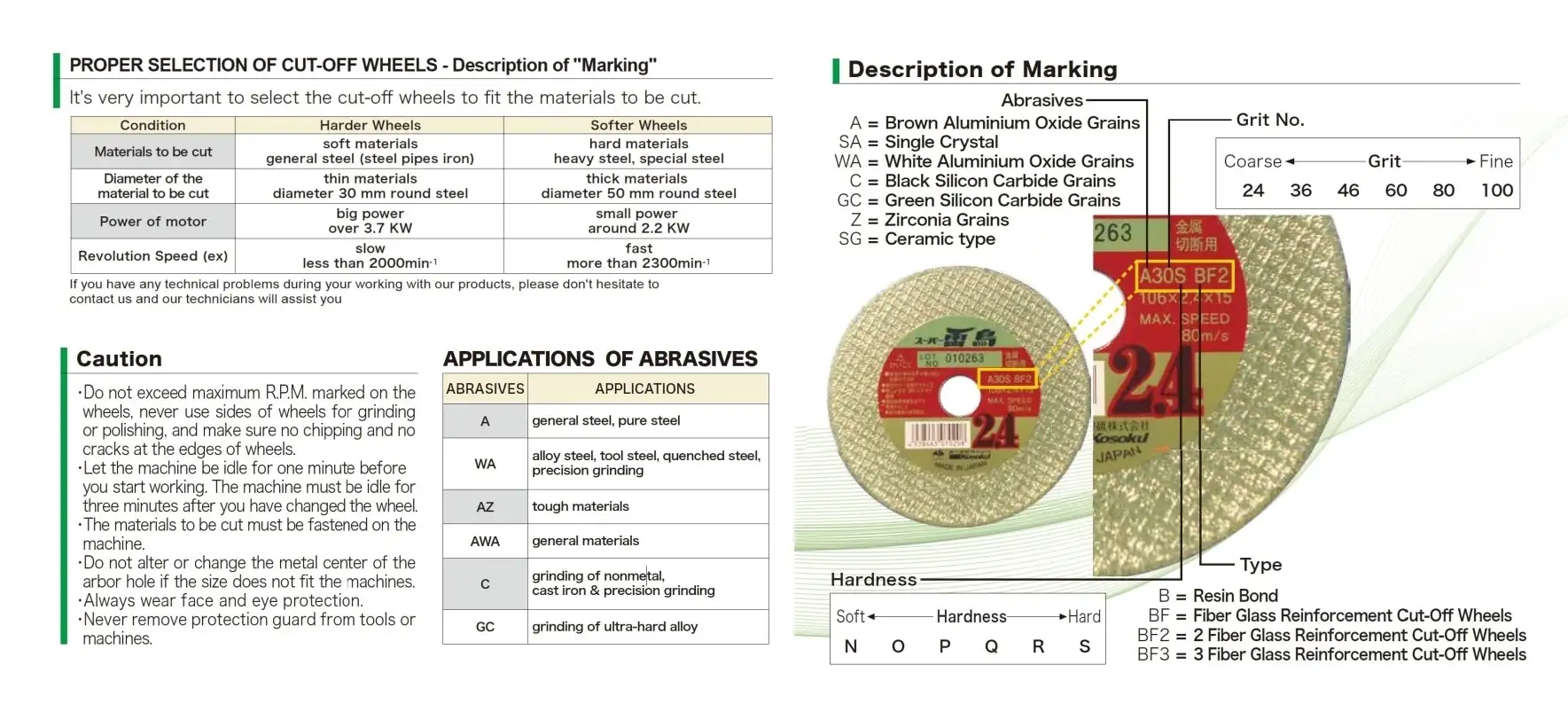
Global Maintenance Standard: To maintain the high safety factor of Fuji wheels, avoid exposure to excessive humidity and chemical solvents during storage. Proper care preserves the resinoid bond's strength, crucial for high-load industrial applications.
Fuji products are manufactured following strict Japanese standard process requirements. Every wheel is engineered to meet or exceed JIS (Japanese Industrial Standards), such as JIS R 6242 and B 4051. Our core engineering logic prioritizes maximum operator protection by maintaining safety factors and burst speed capabilities that often surpass the highest industry benchmarks.
| Standard Region | Safety Factor (Burst Multiplier) | Safety Logic & Benchmark |
|---|---|---|
| FUJI (High Precision) | > 2.0x | Engineered to exceed JIS requirements for maximum reliability. |
| Japan (JIS R 6242) | 2.0x | Extreme Safety: A wheel rated at 80m/s must withstand a 160m/s burst test. |
| Europe (EN 12413) | 1.73x | Risk Balanced: Provides high safety redundancy for most industrial apps. |
| USA (ANSI B7.1) | 1.5x | Efficiency Focused: Relies on machine guarding and operational procedures. |
Abrasive Selection Guide
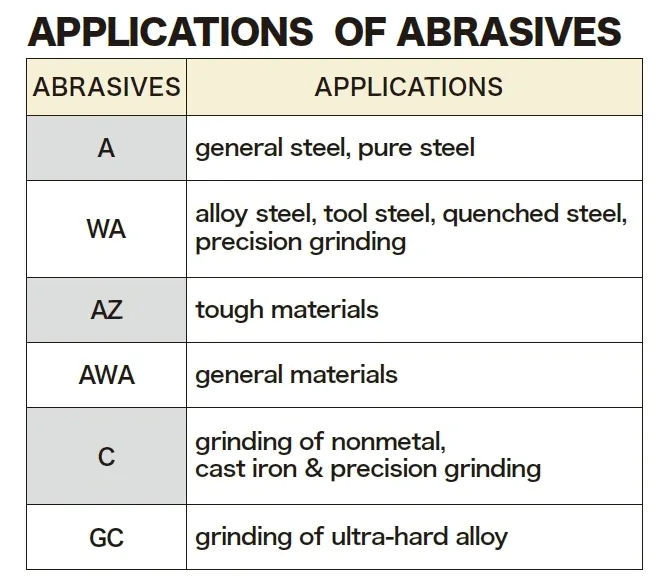
Selection of grains (A, WA, AZ, etc.) based on material hardness and grinding precision.
Warning Symbol Interpretation
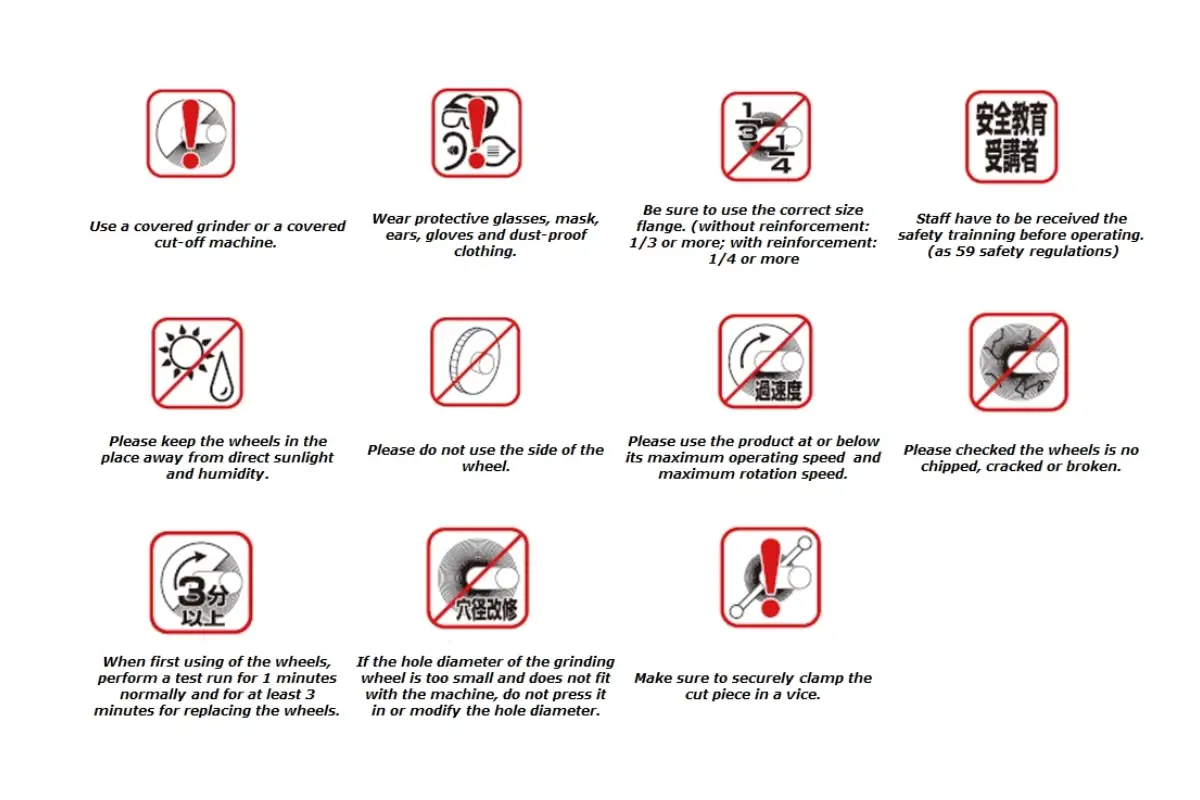
Standardized safety icons for safe operation and protection guard usage.
When deploying Fuji high-performance tools in overseas markets, ensure that the regional power grid frequency and voltage match the tool specifications. To maintain the superior burst speed safety of Fuji wheels, store abrasives in a dry, temperate environment. Humidity can degrade the resin bond, potentially lowering the wheel’s resistance to centrifugal forces.
Fuji products are manufactured following strict Japanese standard process requirements. Every wheel is engineered to meet or exceed JIS (Japanese Industrial Standards), such as JIS R 6242 and B 4051. Our core engineering logic prioritizes maximum operator protection by maintaining safety factors and burst speed capabilities that often surpass the highest industry benchmarks.
| Standard Region | Safety Factor (Burst Multiplier) | Safety Logic & Benchmark |
|---|---|---|
| FUJI (High Precision) | > 2.0x | Engineered to exceed JIS requirements for maximum reliability. |
| Japan (JIS R 6242) | 2.0x | Extreme Safety: A wheel rated at 80m/s must withstand a 160m/s burst test. |
| Europe (EN 12413) | 1.73x | Risk Balanced: Provides high safety redundancy for most industrial apps. |
| USA (ANSI B7.1) | 1.5x | Efficiency Focused: Relies on machine guarding and operational procedures. |
Abrasive Selection Guide
Selection of grains (A, WA, AZ, etc.) based on material hardness and grinding precision.
Warning Symbol Interpretation
Standardized safety icons for safe operation and protection guard usage.
When deploying Fuji high-performance tools in overseas markets, ensure that the regional power grid frequency and voltage match the tool specifications. To maintain the superior burst speed safety of Fuji wheels, store abrasives in a dry, temperate environment. Humidity can degrade the resin bond, potentially lowering the wheel’s resistance to centrifugal forces.


