


At 2.7kg, the FUJI KOSOKU HGP-4160 supports light- and medium-duty grinding at changing workstations.
Use approved high-speed 180mm wheels and mounting parts. A dedicated output cable is required. Avoid prolonged overload grinding and observe the tool and drive duty limits.


The FUJI KOSOKU HGP-4160 is the lightweight model in this pot-type high-frequency grinder range. At 2.7kg, with 1,600W power consumption, it suits light- and medium-duty grinding, including weld dressing, deburring and local steel grinding where operators move between work positions.
Its compact pot-shaped motor housing positions the motor above the wheel. The 309mm length, 110mm height, anti-vibration auxiliary handle and high-grip main handle support two-handed control. Tool weight excludes the separate inverter and output cable.

Like the HGP-4260, this tool requires a compatible electronic HFD Driver (high-frequency drive / inverter) supplying three-phase 200V at 400Hz. It cannot run directly from an ordinary wall socket or a normal three-phase 200V 50/60Hz supply.
Distinguish input from output: the inverter's mains input must match the facility supply; its approved output must match the grinder's 200V / 400Hz requirement. Confirm the exact drive, capacity, connectors and cable configuration before ordering.
The HGP-4160 uses an electronic inverter system, not a traditional rotating motor-generator frequency converter. Traditional Japanese 250Hz and European 300Hz high-frequency equipment may use those mechanical power units. They are not interchangeable with this 400Hz grinder. Matching voltage alone is insufficient: frequency, connection and manufacturer-approved compatibility must also match.
See the FUJI 400Hz electronic inverter power supply and request confirmation of the complete compatible system. A dedicated output cable is required; the catalog lists it as a separate option.

Consider the HGP-4160 for local weld finishing, edge deburring and accessible steel-surface work in fabrication and ship repair. Its lighter format supports frequent repositioning during light- and medium-duty grinding tasks. Keep grinding pressure within the machine and drive ratings and avoid prolonged overload.
Do not treat a 400Hz rating as a promise of constant speed under unlimited pressure. This electronic high-frequency system is not recommended for prolonged overload grinding or continuous high-pressure foundry stock removal. Excessive pressure and repeated overload can shorten tool and drive life. Follow the machine and inverter manuals for thermal limits and duty; no unsupported universal run/rest time is specified here.

| Model | HGP-4160, lightweight type |
|---|---|
| Wheel diameter | 180mm / 7-inch |
| Tool power supply | Three-phase 200V, 400Hz via compatible electronic HFD inverter |
| Current | 6.5A |
| Power consumption | 1,600W |
| Tool weight | 2.7kg |
| Dimensions | 309mm length / 110mm height |
| Spindle connection | M10 × 1.25 female thread; prescribed mounting parts required |
| Wheel rating | Catalog specifies 80m/s wheels; check marked maximum RPM against the machine nameplate |
| Output cable | Dedicated cable, separately specified |
Confirm rated machine speed, wheel bore, thickness, flanges and guard before selecting a wheel. Diameter alone does not establish compatibility.

| Model | Catalog role | Power consumption | Current | Weight |
|---|---|---|---|---|
| HGP-4160 | Lightweight type | 1,600W | 6.5A | 2.7kg |
| HGP-4260 | Heavy-grinding type | 2,600W | 9.5A | 3.5kg |
Both require a compatible 400Hz electronic supply. Choose the 4160 for lower tool weight; consider the HGP-4260 for short periods of heavier grinding at mobile workstations. Neither description authorizes prolonged overload operation.
A compatible Super F2 180mm grinding wheel is an economical option for ordinary steel weld and surface grinding. Ask FUJI to confirm the approved high-speed wheel version and mounting parts for the HGP-4160. Select the abrasive for the material and required finish rather than compensating for an unsuitable wheel with extra pressure.
No. Use a compatible electronic supply with three-phase 200V / 400Hz output. Traditional Japanese 250Hz and European 300Hz systems are different.
No. The grinder requires a separate compatible high-frequency power supply and dedicated output cable. Confirm the items included in the quotation.
No. Select it for controlled grinding with a lightweight tool. Observe the tool and drive loading limits; sustained overload is unsuitable.
No instantaneous stop time is claimed. The dedicated power supply provides braking functionality; keep control of the tool until rotation has stopped.
FUJI KOSOKU offers grinding tools and abrasives for industrial metalworking. A coordinated selection of tool, electronic drive, cable and grinding wheel helps match the system to the actual workstation.

Provide your material, grinding task, typical working cycle, facility voltage and frequency, required cable reach and quantity. Specify HGP-4160 when lightweight handling is your priority.
Fuji products are manufactured following strict Japanese standard process requirements. Every wheel is engineered to meet or exceed JIS (Japanese Industrial Standards), such as JIS R 6242 and B 4051. Our core engineering logic prioritizes maximum operator protection by maintaining safety factors and burst speed capabilities that often surpass the highest industry benchmarks.
| Standard Region | Safety Factor (Burst Multiplier) | Safety Logic & Benchmark |
|---|---|---|
| FUJI (High Precision) | > 2.0x | Engineered to exceed JIS requirements for maximum reliability. |
| Japan (JIS R 6242) | 2.0x | Extreme Safety: A wheel rated at 80m/s must withstand a 160m/s burst test. |
| Europe (EN 12413) | 1.73x | Risk Balanced: Provides high safety redundancy for most industrial apps. |
| USA (ANSI B7.1) | 1.5x | Efficiency Focused: Relies on machine guarding and operational procedures. |
Abrasive Selection Guide
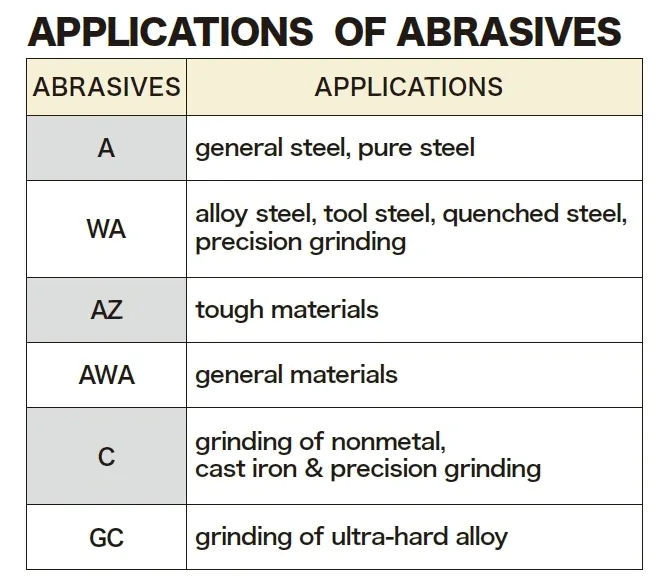
Selection of grains (A, WA, AZ, etc.) based on material hardness and grinding precision.
Warning Symbol Interpretation
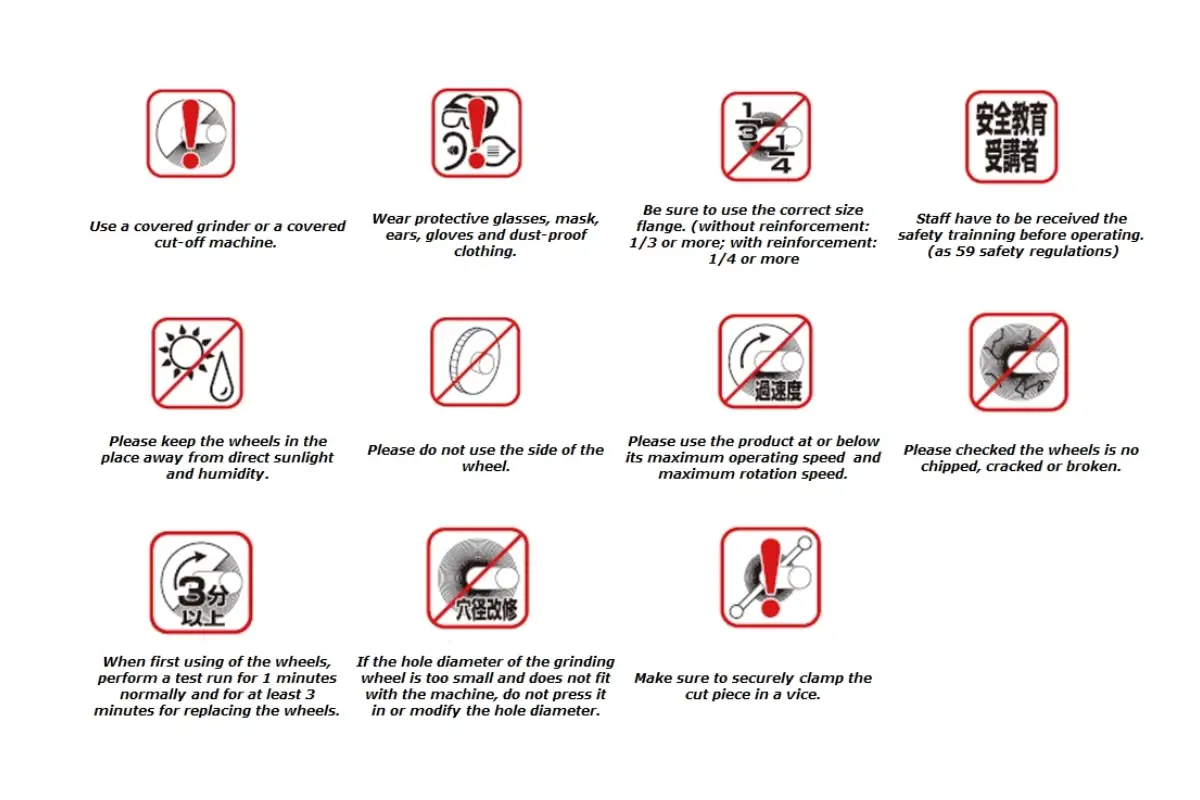
Standardized safety icons for safe operation and protection guard usage.
When deploying Fuji high-performance tools in overseas markets, ensure that the regional power grid frequency and voltage match the tool specifications. To maintain the superior burst speed safety of Fuji wheels, store abrasives in a dry, temperate environment. Humidity can degrade the resin bond, potentially lowering the wheel’s resistance to centrifugal forces.
Fuji products are manufactured following strict Japanese standard process requirements. Every wheel is engineered to meet or exceed JIS (Japanese Industrial Standards), such as JIS R 6242 and B 4051. Our core engineering logic prioritizes maximum operator protection by maintaining safety factors and burst speed capabilities that often surpass the highest industry benchmarks.
| Standard Region | Safety Factor (Burst Multiplier) | Safety Logic & Benchmark |
|---|---|---|
| FUJI (High Precision) | > 2.0x | Engineered to exceed JIS requirements for maximum reliability. |
| Japan (JIS R 6242) | 2.0x | Extreme Safety: A wheel rated at 80m/s must withstand a 160m/s burst test. |
| Europe (EN 12413) | 1.73x | Risk Balanced: Provides high safety redundancy for most industrial apps. |
| USA (ANSI B7.1) | 1.5x | Efficiency Focused: Relies on machine guarding and operational procedures. |
Abrasive Selection Guide
Selection of grains (A, WA, AZ, etc.) based on material hardness and grinding precision.
Warning Symbol Interpretation
Standardized safety icons for safe operation and protection guard usage.
When deploying Fuji high-performance tools in overseas markets, ensure that the regional power grid frequency and voltage match the tool specifications. To maintain the superior burst speed safety of Fuji wheels, store abrasives in a dry, temperate environment. Humidity can degrade the resin bond, potentially lowering the wheel’s resistance to centrifugal forces.
This product strictly complies with the Electrical Appliance and Material Safety Technology Standards (Noise Countermeasures), revised under the Ministry of Economy, Trade and Industry (METI) Ordinance No. 57.
*Official Enforcement Date: April 1, 2013. This ensures maximum electromagnetic compatibility (EMC) and operational stability in industrial environments.

Professional Note: For global industrial procurement, these Japanese METI standards ensure that Fuji tools meet high-level noise reduction requirements, critical for precision workshops across Europe and North America.


