


FUJI KOSOKU No.1D and No.11 semi-automatic wet metal cutting machines combine manual workpiece clamping with a powered saw feed. Based on the KCM-370NE-SC series, they use a 370mm metal saw blade.
Applications: Metal tube, bar and profile cutting. No.11 speed settings can be matched to steel, stainless steel and aluminum with a suitable blade and feed.
Specification: 370mm saw blade | Manual vise | Optional auxiliary vise. Confirm workpiece capacity and utilities for your installation.


FUJI KOSOKU No.1D and No.11 are semi-automatic metal cutting machines based on the KCM-370NE-SC series. An air-hydraulic unit controls saw-head movement, combining a rapid approach with an adjustable cutting feed. The operator positions and manually clamps the workpiece before the cutting cycle.
No.11 adds inverter-controlled blade speed to the No.1D configuration. This makes it useful for workshops processing different metals: blade rotation and cutting feed can be selected for the material and section. The saw unit automatically returns to its starting position after cutting.


| Feature | No.1D | No.11 |
|---|---|---|
| Machine type | Semi-automatic wet metal cutting machine; KCM-370NE-SC-based design | |
| Saw feed | Air-hydraulic unit; rapid approach followed by adjustable cutting feed | |
| Inverter speed adjustment | Base configuration | Added inverter for stepless blade-speed adjustment |
| Clamping | Manual vise; auxiliary vise optional | |
| Positioning | Inching movement without blade rotation | |
| Return after cutting | Confirm supplied configuration | Automatic return to starting position |
| Catalog blade dimensions | 370 × 2.5 (3.0) × 45 mm. Confirm blade thickness and mounting details before ordering. | |
| Catalog accessories | Operating handle and length stop | |
370mm is the saw blade diameter, not the maximum workpiece diameter. Cutting capacity depends on the section, dimensions and setup. Send a drawing or sample specification for capacity confirmation. Motor power, voltage, air supply and machine dimensions should be confirmed against the quotation.
The catalog gives example blade rotation speeds of 11 rpm for stainless steel, 22 rpm for iron and 43 rpm for aluminum. These are rotational speeds in revolutions per minute, not cutting speeds in metres per minute or a stated minimum-to-maximum speed range.
Choose the metal saw blade, tooth configuration and cutting feed together with the material grade and section. Thin-wall tubes and solid bars require different cutting setups. Catalog examples are starting references, not universal settings for every alloy or workpiece.
Use the machines for workshop cutting of metal tubes, bars and profiles where controlled feed and manual clamping suit the production process. No.11 is the more flexible choice when changing between steel, stainless steel and aluminum requires blade-speed adjustment.
For repeated component preparation, confirm required cut length, section size, output and handling arrangements. Read the existing KCM-370 wet metal cutting application article for related background.
Need automatic clamping? The catalog identifies No.22 as the model with added automatic clamping. Its air-operated and boosted-clamping variants are separate configurations; those features are not included in the No.11 specification.

No.11 adds an inverter to the No.1D design for stepless blade-speed adjustment. The catalog also specifies automatic return after cutting for No.11. Both use manual workpiece clamping.
The powered saw feed is semi-automatic; the operator positions and manually clamps the material. Do not confuse saw-head feed with automatic bar feeding. Ask about No.22 when automatic clamping is required.
No. The catalog specifies an air-hydraulic feed unit without a separate hydraulic power unit. Confirm the compressed-air supply and electrical requirements before installation.
The catalog lists 370 × 2.5 (3.0) × 45 mm. Confirm all mounting dimensions, blade specification and suitability for the material with FUJI before purchase. The blade diameter does not establish workpiece capacity.
Yes. The catalog provides speed examples for both, as well as iron. The material grade, workpiece dimensions, blade and feed determine the appropriate setup.
Follow the supplied machine manual for setup, guarding, coolant, blade replacement and maintenance. Secure and support the workpiece, keep hands clear of the cutting zone and use the required protective equipment. Isolate electrical and pneumatic supplies before blade changes or servicing. Check blade condition, coolant delivery and vise operation as part of routine inspection.
Send your material grade, tube or bar dimensions, cut length, required output and available power and air supply. FUJI can confirm the machine configuration, saw blade, workpiece capacity and delivery details.
Request a Machine QuotationFuji products are manufactured following strict Japanese standard process requirements. Every wheel is engineered to meet or exceed JIS (Japanese Industrial Standards), such as JIS R 6242 and B 4051. Our core engineering logic prioritizes maximum operator protection by maintaining safety factors and burst speed capabilities that often surpass the highest industry benchmarks.
| Standard Region | Safety Factor (Burst Multiplier) | Safety Logic & Benchmark |
|---|---|---|
| FUJI (High Precision) | > 2.0x | Engineered to exceed JIS requirements for maximum reliability. |
| Japan (JIS R 6242) | 2.0x | Extreme Safety: A wheel rated at 80m/s must withstand a 160m/s burst test. |
| Europe (EN 12413) | 1.73x | Risk Balanced: Provides high safety redundancy for most industrial apps. |
| USA (ANSI B7.1) | 1.5x | Efficiency Focused: Relies on machine guarding and operational procedures. |
Abrasive Selection Guide
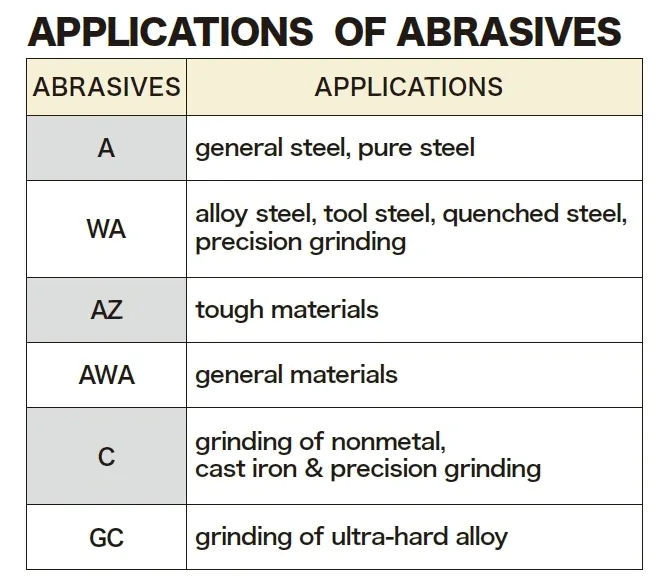
Selection of grains (A, WA, AZ, etc.) based on material hardness and grinding precision.
Warning Symbol Interpretation
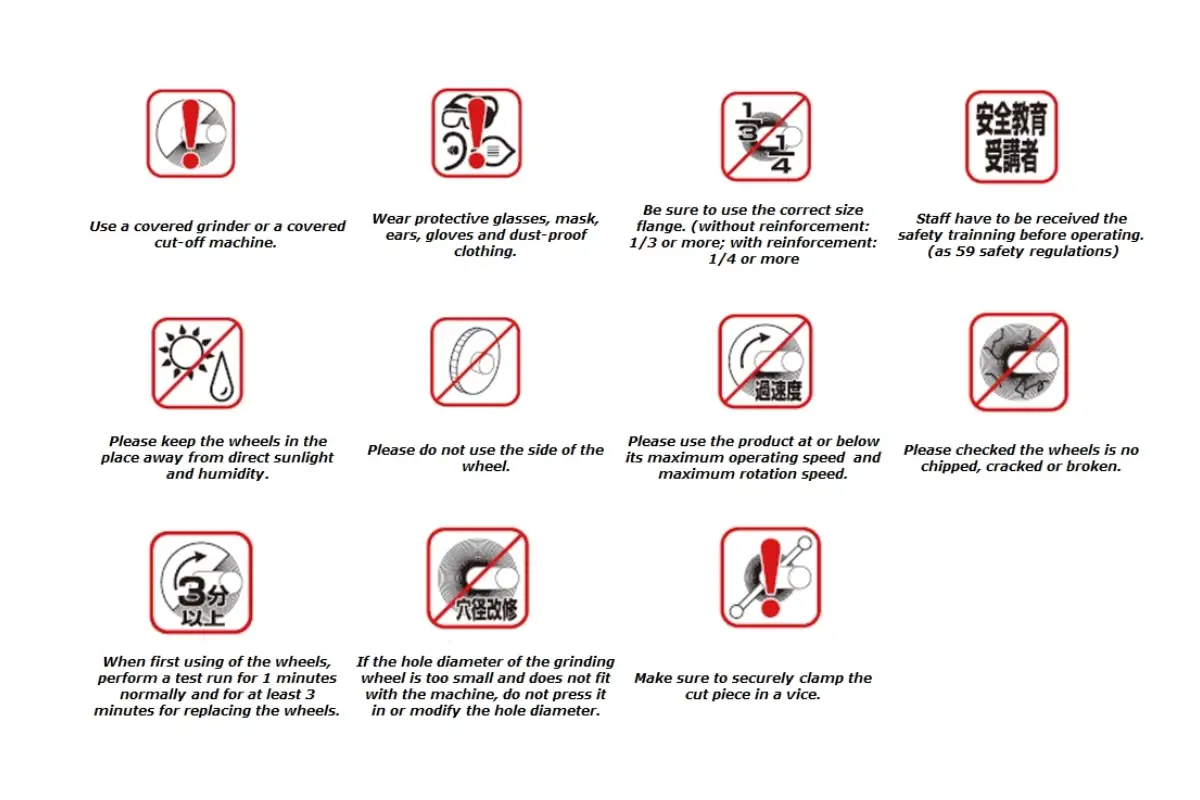
Standardized safety icons for safe operation and protection guard usage.
When deploying Fuji high-performance tools in overseas markets, ensure that the regional power grid frequency and voltage match the tool specifications. To maintain the superior burst speed safety of Fuji wheels, store abrasives in a dry, temperate environment. Humidity can degrade the resin bond, potentially lowering the wheel’s resistance to centrifugal forces.
Fuji products are manufactured following strict Japanese standard process requirements. Every wheel is engineered to meet or exceed JIS (Japanese Industrial Standards), such as JIS R 6242 and B 4051. Our core engineering logic prioritizes maximum operator protection by maintaining safety factors and burst speed capabilities that often surpass the highest industry benchmarks.
| Standard Region | Safety Factor (Burst Multiplier) | Safety Logic & Benchmark |
|---|---|---|
| FUJI (High Precision) | > 2.0x | Engineered to exceed JIS requirements for maximum reliability. |
| Japan (JIS R 6242) | 2.0x | Extreme Safety: A wheel rated at 80m/s must withstand a 160m/s burst test. |
| Europe (EN 12413) | 1.73x | Risk Balanced: Provides high safety redundancy for most industrial apps. |
| USA (ANSI B7.1) | 1.5x | Efficiency Focused: Relies on machine guarding and operational procedures. |
Abrasive Selection Guide
Selection of grains (A, WA, AZ, etc.) based on material hardness and grinding precision.
Warning Symbol Interpretation
Standardized safety icons for safe operation and protection guard usage.
When deploying Fuji high-performance tools in overseas markets, ensure that the regional power grid frequency and voltage match the tool specifications. To maintain the superior burst speed safety of Fuji wheels, store abrasives in a dry, temperate environment. Humidity can degrade the resin bond, potentially lowering the wheel’s resistance to centrifugal forces.


