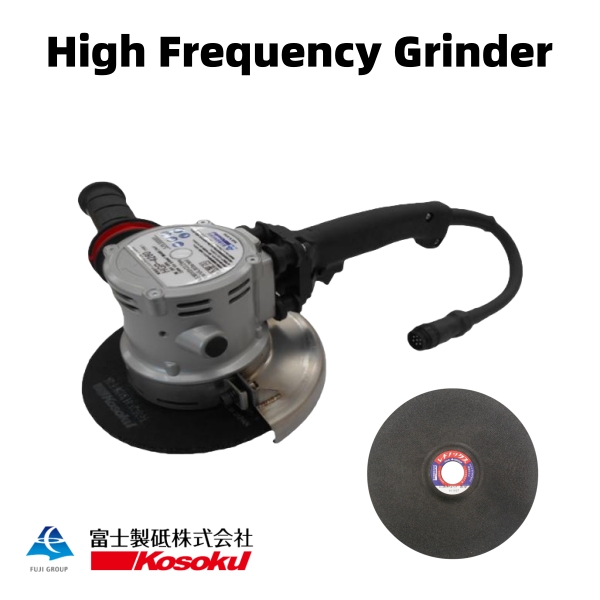
The FUJI KOSOKU HGP-4260 is a 180mm (7-inch), 400Hz high-frequency angle grinder for mobile maintenance workstations. At approximately 3kg for the grinder itself, it is a practical option where operators move between short grinding tasks, such as local rail-weld cleanup and shipyard repair work.
The tool requires a compatible 200V, 400Hz high-frequency supply from an HFD Driver (High-Frequency Drive / Inverter). Its electronic drive arrangement supports a portable setup and a braking function for faster stopping. This combination is intended for controlled, intermittent work within its rated limits—not prolonged overload grinding.
The HFD Driver converts its approved incoming electrical supply into the high-frequency supply needed by the grinder. The grinder’s 200V / 400Hz requirement describes the output supplied to the tool; it does not establish the inverter’s mains-input voltage. Confirm the driver input, output, capacity, connector and cable arrangement for the exact supplied configuration.
Use the matched FUJI 400Hz electronic high-frequency inverter configuration approved for the HGP-4260. A generic variable-frequency drive is not automatically a compatible substitute: the motor, control settings, protective functions and braking arrangement must work together. Do not connect the grinder directly to an ordinary 50Hz or 60Hz mains outlet.
| System | Power arrangement | Selection implication |
|---|---|---|
| HGP-4260, 200V / 400Hz | Matched electronic HFD Driver / inverter | A movable setup for intermittent maintenance grinding; observe tool and driver load limits. |
| Traditional Japanese 250Hz equipment | 250Hz rotary motor-generator / frequency-converter installation | Requires tools approved for that supply; it is not the HGP-4260’s specified power system. |
| Traditional European 300Hz equipment | 300Hz rotary motor-generator / frequency-converter installation | Requires tools matched to the installation; a 300Hz outlet is not interchangeable with 400Hz. |
These are different equipment configurations, not a rule that frequency alone determines durability. A matching voltage or connector does not make 250Hz, 300Hz and 400Hz tools interchangeable. Select the complete tool-and-supply system for the duty cycle and verify the nameplates and manufacturer instructions.
The approximately 3kg grinder is easier to reposition than a substantially heavier tool when moving between local repairs. Lower tool weight can reduce the handling burden, but operator fatigue also depends on posture, reach, contact force, vibration and working time. The quoted weight is for the grinder, not the combined weight of the driver, cables and accessories.
The matched system’s braking function helps reduce wheel run-down time after switching off. This is useful when stopping repeatedly between work positions. It does not eliminate wheel contact or kickback risks: wait for the wheel to stop fully before setting the tool down, and disconnect the supply before changing accessories. No specific stopping time is claimed here; confirm the supplied configuration and instructions.
For railway maintenance teams, the HGP-4260 is an option for authorized, localized weld-cleanup or repair-grinding tasks where a portable 180mm tool can access the work and intermittent operation is appropriate. The grinder and HFD unit can be selected as a mobile work package, provided the site supply, cables and operating conditions are suitable.
Rail grade, weld condition, material-removal requirement and permitted profile determine the wheel and process. Confirm a rail-suitable abrasive with FUJI rather than assuming a general steel wheel is approved for every rail. Final running-surface geometry and acceptance must follow the railway operator’s procedures; a handheld angle grinder is not a substitute for dedicated rail-profile equipment where that equipment is required.
Typical candidate tasks include localized weld cleanup, small repair-area preparation and accessible steel-edge work at changing positions around a shipyard. The benefit is convenient handling across several short tasks, rather than leaving the tool pressed into a large surface for a prolonged heavy-removal cycle.
Plan placement of the driver and cable route as well as access for the operator. Protect equipment and connections from conditions outside their ratings, and follow shipyard electrical and hot-work procedures. Confined spaces, coatings and nearby combustible materials require the appropriate site assessment and controls.
The HGP-4260 has limited tolerance for overload grinding. Sustained excessive load can substantially shorten the life of this tool-and-driver setup. Short-duration work is suitable only within the rated operating limits; it is not permission to overload the machine for a shorter period.
Use an effective, material-matched wheel and controlled pressure rather than compensating for poor cutting action by pressing harder. If the task requires persistent heavy pressure or continuous high material removal, reassess the equipment selection. Follow the prescribed duty cycle and cooling requirements for both tool and inverter; this guide does not invent a universal number of minutes on or off.
Unusual heating, repeated protection trips, abnormal noise or deteriorating grinding action require investigation. Do not repeatedly reset protection to continue the same overloaded operation. For long-duration heavy foundry work or large gate and riser removal, request a system specifically rated for that duty.
| Wheel option | Application focus | Selection check |
|---|---|---|
| Improved Super F2, 7-inch | Economical aluminum-oxide option for ordinary steel, routine weld cleanup and medium-intensity grinding. | Evaluate the improved specification for usable removal rate, handling and cost on the actual steel. |
| Super Z series, 7-inch | Zirconia option for more demanding material removal where sharper grinding action and productivity are priorities. | Match the material and required contact pressure to the tool’s load limits; a more aggressive wheel does not increase the machine’s duty rating. |
Ask for the improved 180mm Super F2 specification or a suitable Super Z zirconia grinding wheel. Confirm actual diameter, bore, mounting, guard, material rating and the wheel’s maximum RPM against the exact grinder nameplate. Both are grinding-wheel selections, not rail cut-off wheels.
These pairings can improve the usefulness of the setup when the abrasive matches the task. Measure the outcome on representative work rather than assuming a fixed productivity multiplier. Compare removal time, wheel wear, surface condition, handling and any driver protection events.
The high-frequency induction motor has no carbon brushes. This removes brush replacement from routine service, but bearings, gears, cables, switches, guards and the driver still need inspection and maintenance according to the manuals. Brushless construction does not prevent overload damage or guarantee a particular service life.
No. It requires a compatible HFD Driver supplying 200V at 400Hz. Confirm the driver’s separate mains-input requirement before connecting the system.
Not as a direct substitute for the specified 200V / 400Hz HFD system. Frequency, voltage, capacity and the complete approved configuration must match.
No. Its application focus is mobile, intermittent work within rated limits. Prolonged overload can substantially shorten service life.
The braking function supports faster stopping, but no instantaneous stop or fixed stopping time is claimed. Wait for complete standstill before setting down the tool.
Consider improved Super F2 for economical ordinary-steel grinding, or Super Z zirconia for more demanding removal. Confirm the material, speed and mounting requirements, and select separately for rail applications.
Send the workpiece material, weld or repair dimensions, required removal, expected grinding time per task, available electrical supply and distance between work positions. FUJI can help assess whether the HGP-4260 and HFD Driver fit the duty, and select an appropriate 180mm wheel for evaluation.


