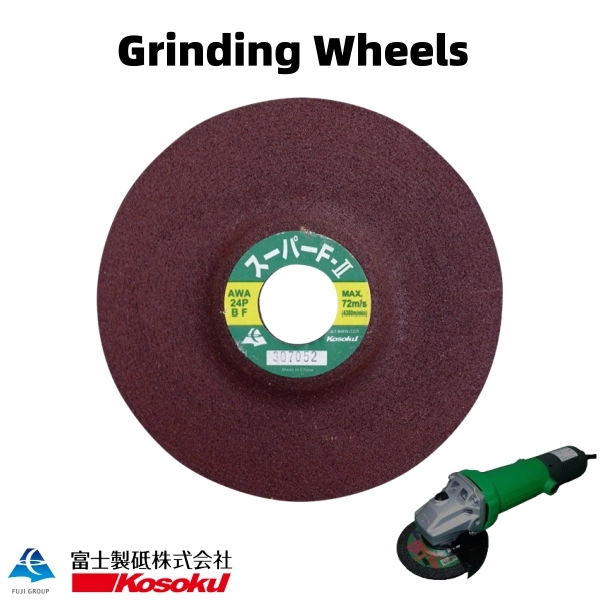
Selecting a 180 mm grinding wheel requires more than comparing 24 and 36 grit. The wheel type, complete specification, approved workpiece material, bore, maximum operating speed and grinder configuration must all match the job.
This guide explains how to compare AWA24P and AWA36P as specification examples without turning a general industry value into a claimed rating for every FUJI wheel. The product label and current technical data remain the authority for the wheel supplied.
A code such as AWA24P or AWA36P contains several elements. The exact meaning must be checked against the manufacturer's marking system, but the number normally identifies grit size and the following letter identifies wheel grade. Grit is not the same as bond type, and grade is not a claim of overall product quality.
| Item to check | Why it matters |
|---|---|
| Wheel type and dimensions | The grinder guard, flanges and intended operation must match the wheel shape, diameter, thickness and bore. |
| Abrasive and material approval | A wheel for general steel is not automatically suitable for stainless steel, aluminium or every casting. |
| Grit size | Coarser grit can support heavier removal; a finer option can improve control and surface condition when less stock remains. |
| Wheel grade | Grade describes how strongly the bond holds the abrasive grains; it must be considered with material, pressure and contact area. |
| Maximum operating speed | The marked wheel speed must equal or exceed the grinder's no-load speed. Use the wheel label, not an assumed 180 mm default. |
A coarser 24-grit specification may be evaluated for substantial weld reinforcement, edge preparation or rough stock removal on an approved material. It can leave a deeper scratch pattern and may require a separate blending or finishing step.
A 36-grit specification may offer more control when less stock remains or when the following surface requirement is more important. It is not automatically the faster or longer-lasting choice; the result depends on the complete wheel specification and operating conditions.
Do not select solely from grit. Two wheels with the same grit can behave differently because of abrasive blend, grade, bond, reinforcement, structure and manufacturing process.
| Operation | Selection question | Trial result to record |
|---|---|---|
| Heavy weld removal | How much reinforcement may be removed without damaging the parent metal or required weld profile? | Time, accepted profile, wheel wear and follow-up work. |
| Edge preparation | What angle and dimensions are required by the approved welding procedure? | Geometry, repeatability and rework. |
| Casting cleanup | Is the wheel specification approved for the casting material and contact conditions? | Removal rate, loading, surface defects and wheel condition. |
| Surface blending | Would a separate finishing abrasive produce the required surface more efficiently? | Scratch pattern, total processing time and number of process stages. |
Inspect the wheel before mounting and after any suspected impact. Stop immediately for cracks, chips, abnormal vibration or damage. Follow the wheel and grinder instructions and the applicable workplace procedure.
The FUJI Super F-II 180 mm product page is the starting point for confirming available specifications. Before a production trial, record the full label, material, grinder model and speed, contact method and acceptance target.
Compare several representative parts. Measure time to an accepted result, wheel consumption, changeovers and rework. Do not claim lower vibration, longer life or higher removal rate without a defined comparison method and recorded data.
No. It may be a useful candidate for heavier removal, but the full specification, material and process determine performance.
Only if the supplied wheel is specifically approved and marked for that stainless-steel application. Do not infer approval from diameter or grit.
Send the workpiece material, operation, grinder model and no-load speed, current wheel label, required dimensions or finish and representative photos.
Use the complete application data to compare suitable FUJI specifications and define a repeatable trial.


