The most useful efficiency measure is the cost of producing an acceptable surface or weld profile. A disc that wears slowly can still be expensive if it removes metal slowly or creates extra finishing work. Compare grinding time, wheel consumption and rework together.
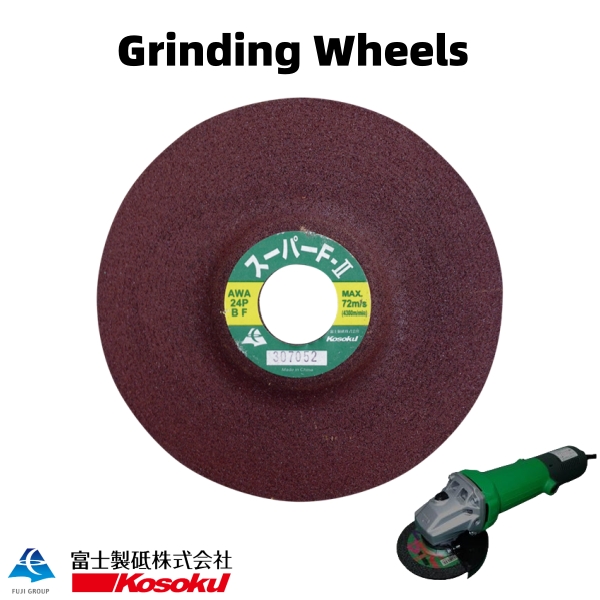
Use the same workpiece material, weld geometry, finish requirement and removal target. Record the grinder model, permitted wheel dimensions, speed, guard and mounting arrangement. Select a grinding wheel specifically approved for the material and operation. Do not infer stainless-steel suitability or composition limits from an abrasive letter such as WA alone.
For a starting specification, review the FUJI Super F2 grinding wheel. Select the exact diameter, thickness, bore and grade for the machine; a product family is not a single universal specification.
| Record | Why it matters |
|---|---|
| Material, weld size and required profile | Prevents unlike jobs being compared. |
| Grinding time and accepted parts | Measures usable output, not simply time with the motor running. |
| Wheel use and replacement time | Captures abrasive and downtime costs. |
| Rework and rejected parts | Accounts for overheating, gouging or an unacceptable finish. |
Mass removal rate = workpiece mass removed ÷ active grinding time. Report consistent units, such as g/min. For a volumetric rate, convert the removed mass using the workpiece material density.
Cost per accepted part = (abrasive cost + labour and machine time + rework cost) ÷ accepted parts. Use the same accounting boundary for both candidates. Include changeover time only once. A longer-lasting wheel does not automatically halve total production cost.
G-ratio is the volume of workpiece material removed divided by the volume of wheel wear. It is not the simple ratio of two masses unless the relevant densities are accounted for. Do not estimate the worn volume of a shaped disc from diameter alone when thickness and profile have also changed. Where wheel volume cannot be measured reliably, report material removal, wheel consumption and cost separately.
Glazing, rapid wear and heat marks can have different causes: an unsuitable specification, incorrect contact conditions, excessive pressure or a machine problem. Change one approved process variable at a time. Do not exceed the marked speed, remove a guard or modify a wheel to obtain a better test result. Reinforcement does not make a disc unbreakable.
No. Grade describes grain retention by the bond. The best balance depends on material, contact area, machine power and finish requirements. Verify the result on the intended job.
Use only the operations stated on the exact disc label and instructions. Do not assume a depressed centre authorizes both cutting and grinding.
Include material grade, weld or stock dimensions, grinder data, the current wheel label, required finish and your trial results. This makes a recommendation more specific than a request for the “best” disc.
Continue with wheel markings and speed compatibility or the depressed-center wheel application guide. Request a specification review.


