The FUJI Super F-II 100 × 6 mm grinding wheel is an economical option for steel weld grinding and localized surface cleanup with a compatible 4-inch angle grinder. In shipbuilding and repair, its compact size is useful where access and handling matter alongside removal rate.
This application guide retains the Philippine shipyard demonstration and the reported short-trial figures, and explains how to evaluate them before choosing a wheel for regular production.
Use the wheel for accessible steel weld seams, localized stock removal and surface irregularities within the job's approved grinding procedure. Before grinding, identify the required remaining weld profile or surface allowance. Removing too much base metal creates repair work and can compromise the component.
A 4-inch tool can be easier to position around brackets and smaller details. Larger, accessible welds may justify a larger approved wheel and grinder. The Super F2 series covers sizes from 4 to 7 inches; this article focuses on the 100 × 6 mm example, not a single specification for the entire range.
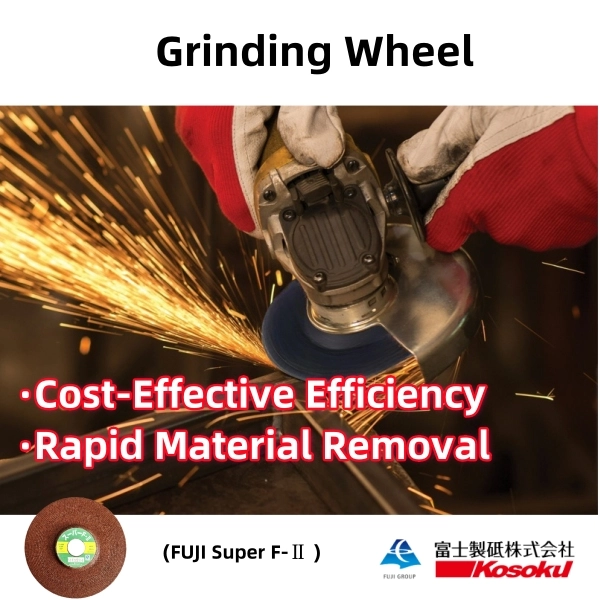
Super F2 combines selected aluminum oxide abrasives with phenolic resin and fiberglass reinforcement. FUJI uses controlled warm-press manufacturing to consolidate the formulation. The intended balance is useful removal performance and economical wheel consumption in steel grinding.
The bond must hold working grains while allowing the cutting surface to renew as grains wear or fracture. Actual behavior depends on the selected grade, workpiece and contact conditions. Reinforcement supports wheel integrity but does not make a wheel safe to drop, strike, overspeed or misuse.
The original field account reports a three-minute comparison with a Tyrolit wheel. The figures below are retained as a record of that specific report. The account does not identify the comparison wheel's full specification, grinder model, steel grade, repeat count or whether millimetre wear means diameter or radial loss. Those details are needed before treating the result as a repeatable purchasing benchmark.
| Reported measure | Comparison wheel | FUJI Super F-II |
|---|---|---|
| Grinding interval | 3 minutes | 3 minutes |
| Workpiece mass removed | 18 g | 24 g |
| Calculated mass removal rate | 6 g/min | 8 g/min |
| Reported linear wheel wear | 2.5 mm | 1.8 mm |
For that interval, 24 g versus 18 g represents approximately 33% more mass removed; 1.8 mm versus 2.5 mm represents 28% less reported linear wear. These are not universal performance guarantees or evidence of a measured reduction in vibration exposure.
These measurements do not establish G-ratio. G-ratio compares workpiece volume removed with wheel volume lost. Workpiece mass and an undefined linear wear measurement cannot be divided to obtain it. For production decisions, also record finish quality, rework and useful wheel life over repeated trials.
Confirm the wheel's bore, thickness, mounting parts, guard requirements and marked maximum RPM against the grinder manual. Do not choose a wheel solely because its nominal diameter fits. If using high-frequency angle grinders, match the tool's specified voltage and frequency to the power source and check wheel compatibility separately.
The power supply frequency does not determine a wheel's permitted operating speed. Use the RPM on the actual tool and wheel labels. A grinding-only wheel is not a cutting disc.
For a more detailed recording method, use the grinding efficiency trial guide. Include several runs so that one favorable cut does not determine the purchasing decision.
Inspect wheels and mounting parts before use. Follow the wheel and grinder instructions for working angle, contact pressure and the correct flanges; there is no single flange dimension suitable for every grinder. Keep the guard fitted, secure the workpiece and use the PPE and dust controls required for the task.
Store resin wheels in their protective packaging in a dry location away from water, direct sun and damaging temperature changes. Follow the product's date markings and storage limits. Stop if the wheel is damaged or the machine develops abnormal vibration.
Choose according to access, handling, stock removal and the approved grinder capacity. A larger wheel can suit open areas; a compact tool can suit localized work. Do not fit an oversized wheel to a smaller grinder.
Confirm a stainless-specific grade and any contamination requirements. Do not assume a carbon-steel grinding specification is suitable for every stainless application.
No. It reports a short interval. Evaluate complete useful life, repeatability and finish in your own production conditions.
Follow the actual wheel label and grinder instructions. The tool's no-load RPM must not exceed the wheel's marked maximum RPM.
FUJI Grinding Wheel has manufactured abrasives since 1953. The Philippine field account identifies PIO-SHIP SYSTEM, INC. as its local contact for application discussions. Contact Pio-Ship at sales_ph@pio-ship.com or visit its company page to confirm current local support arrangements.
Send your steel grade, weld or cleanup task, grinder model, current wheel, required quantity and main problem. FUJI can discuss a suitable specification and a practical trial comparison.
Request a Quote or Sample Trial


